Is Camping With Young Kids Actually Worth It?
On this page 7
Camping with young kids is worth it for most families, with two conditions: pick a campground with real bathrooms and a short walk from the car, and keep the first trip to two nights instead of five. Under those conditions, the usual pattern is that kids adjust faster than the parents expect, and the parents are more tired than the kids by the second morning. Skip those conditions — a remote site, a first trip that's also a long one — and the odds of it going badly go up fast.
The honest tradeoff isn't "camping is hard" versus "camping is magical." It's that camping trades money for effort. You'll save on the lodging line and spend more energy on setup, food, and managing a kid who's overtired from sleeping somewhere new. Whether that trade is worth it depends on how much your family actually enjoys the doing-it-yourself part, not just the campfire part.
The packing checklists in the trip planner include a first-time-camping section, so the gear side of this decision feels less like a leap and more like a list you can just work through.
What tends to go well
Young kids generally adapt to sleeping in a tent faster than parents predict — the novelty usually works in your favor the first night or two. Campgrounds inside or near national parks tend to have other camping families around, which means playmates show up without any effort on your part. And the built-in structure of camping — everyone's asleep by dark, everyone's up with the sun — often matches a young kid's natural rhythm better than a hotel schedule does.
What tends to go wrong
Cold nights catch first-timers off guard more than almost anything else; even a "warm" destination can drop to uncomfortable overnight temperatures, and an underdressed toddler at 2am is a rough night for everyone. Overpacking the itinerary — trying to hike hard and camp on the same trip — burns out parents faster than kids. And a campsite with a long walk to the bathroom is a bigger deal with a potty-training kid than it sounds like when you're booking.
The gear that actually matters for a first trip
A sleeping bag or blanket setup rated well below the coldest night you'll see, not the average — kids feel cold faster than adults and won't always say so before it's a problem. A headlamp per kid turns nighttime bathroom trips from a fight into a small adventure. And a real sleeping pad, not just a bag on the ground, matters more for a young kid's sleep quality than most first-timers expect.
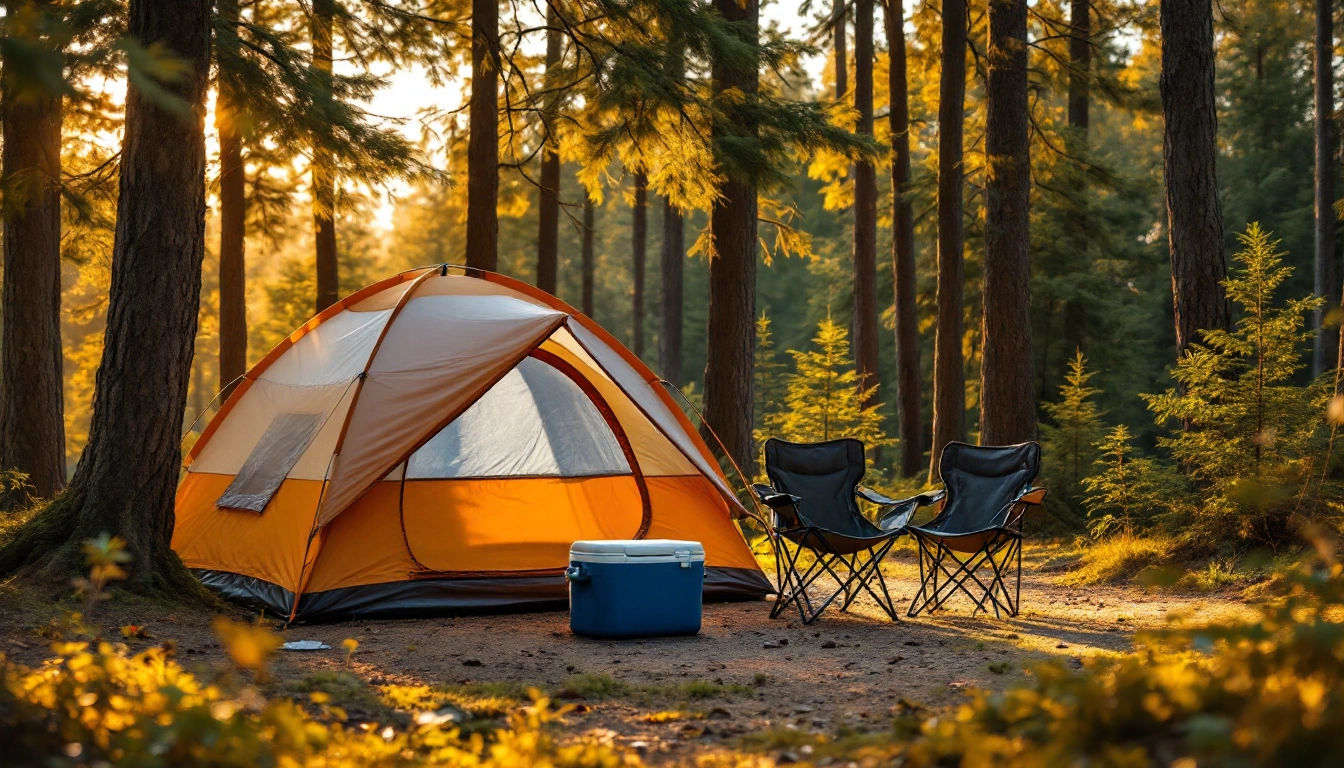
Kid-sized sleeping bags and a family tent setup is worth buying or borrowing before the trip rather than assuming a shared adult bag or an oversized loaner tent will be comfortable enough — comfort is what determines whether this becomes a repeat trip or a one-time experiment.
Picking the right first campground
Look for a campground with flush toilets (not just vault toilets), a site close to parking so gear doesn't need to be carried far, and — if you can find one — a site near a playground or open field. These features matter more for a first trip than proximity to the best trailhead; you can always camp somewhere more remote once you know the family enjoys it.
If the answer is no, for now
Camping isn't the only way to get outdoor time with young kids, and skipping it for a lodge or gateway-town stay this trip doesn't close the door on it later. A lot of families do their first real camping trip once kids are old enough to help with setup and sleep through a cold night without needing an adult up at 2am — there's no rule that says it has to happen on the youngest kid's watch.
A practice run close to home
Booking a first national-park camping trip without ever having pitched the tent is the biggest single risk factor for a bad experience. A one-night trial at a local campground, or even a backyard sleepover in the actual tent you're bringing, surfaces the real problems — a sleeping pad that's too thin, a kid who's genuinely afraid of the dark, a tent that takes 40 minutes to set up in the daylight let alone at dusk — while the stakes are still low and home is five minutes away.
Food, without the extra stress
Camp cooking with young kids goes more smoothly with meals that need little more than boiling water or heating on a single burner, at least for the first trip. This isn't the moment to test an ambitious campfire recipe — a simple, repeatable dinner rotation frees up the mental energy that setup and a new sleeping environment are already using up.