First-Time Family Camping in a National Park
On this page 7
First-time family camping in a national park is more manageable than it sounds, as long as you test your gear before the trip instead of during it. The single most useful thing you can do is set the tent up once in the backyard or living room before you go — that's the step that turns "we think we know how this works" into "we know how this works," and it's the difference between a 10-minute setup at a dark campsite and a 45-minute one with two tired kids waiting.
The printable checklists in the trip planner are built for exactly this — a first-timer's camping list instead of a generic one, so nothing gets left off because it seemed obvious.
What actually surprises first-time families
It's colder at night than the daytime forecast suggests, even in summer — many parks sit at elevation, and temperatures can drop 20 to 30 degrees after dark. Pack sleeping bags rated well below what you think you'll need, plus a warm layer for each kid to sleep in. It's also darker than expected once the sun goes down; a couple of headlamps per person, not just one shared flashlight, keeps bathroom runs from turning into a group event.
Ground matters more than most people plan for. A sleeping pad isn't optional for comfort — the ground pulls heat out of a sleeping bag from underneath, so even in warm weather a pad keeps kids from waking up cold at 3am.
The gear that earns its spot
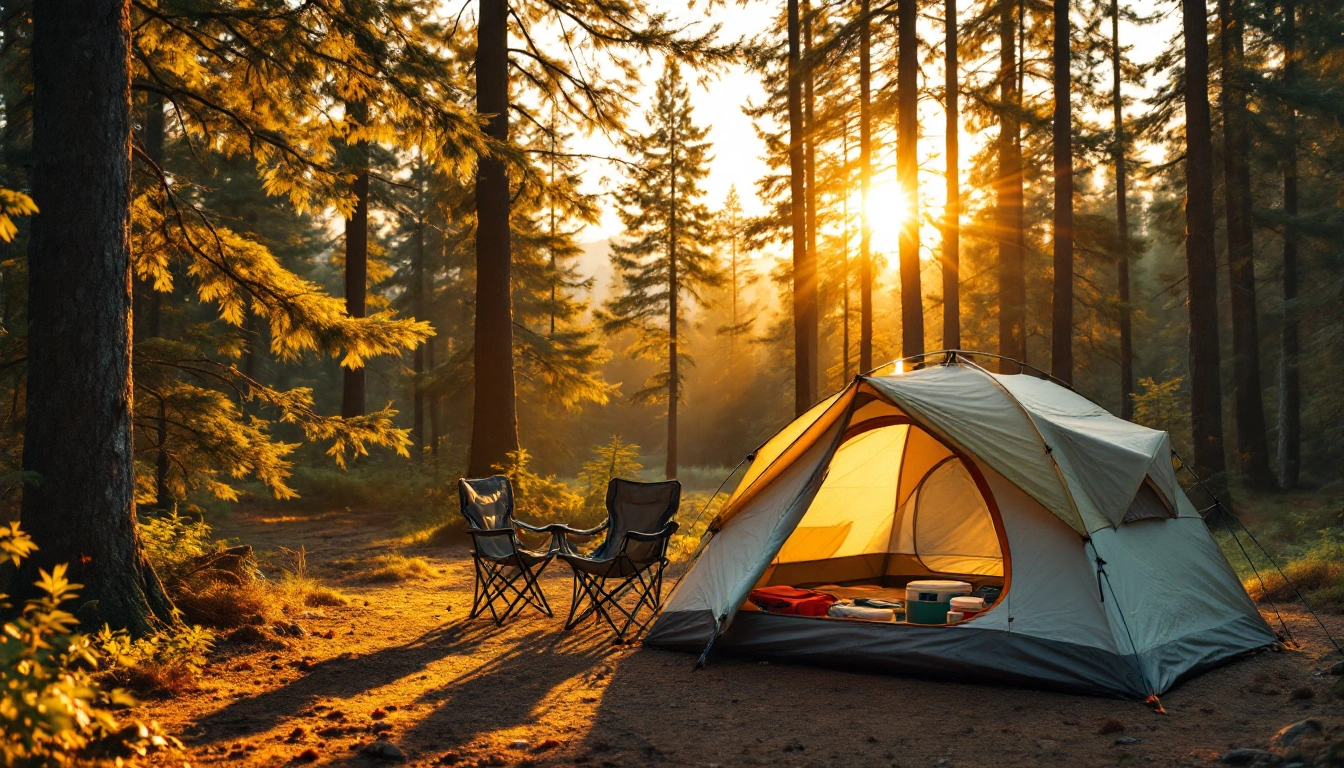
A four-season tent isn't necessary for most summer camping, but a tent rated for one or two more people than your family size buys real comfort — gear takes up space, and a tight tent gets worse fast with kids moving around in it. A camp stove beats a fire for reliable cooking, especially with fire restrictions common in dry seasons. A cooler with good ice retention and a simple headlamp-and-lantern combo round out the list.
A family-sized tent and sleeping bag set built for camp comfort is worth the upgrade if you're starting from nothing — rental gear works for a one-off trip, but owned gear that fits your family gets used again, and a bad first night on borrowed gear can sour the whole idea.
Food and the fire question
Plan simple meals that don't need much cleanup — foil-pack dinners, pre-cut vegetables, things that cook in one pot. Store all food in the car or a bear-proof locker overnight, not in the tent, and not in a cooler left out — many parks require this by regulation, not just suggestion, because campgrounds with food left out attract wildlife that then becomes a problem for every camper after you. Check the specific food-storage rules for your park before you go; they vary and they're enforced.
The night that actually goes sideways
The most common first-timer problem isn't bears or weather — it's a kid who can't fall asleep in an unfamiliar, noisy, dark place. Bring whatever your kid sleeps with at home, keep bedtime close to the normal routine, and don't schedule a big hike for the next morning in case the first night runs short on sleep. A slower first morning saves the trip more than an ambitious itinerary does.
Bathroom and shower reality
Frontcountry campgrounds usually have vault toilets or flush bathrooms nearby, and some have coin showers; backcountry and more remote sites often don't. Check what your specific campground offers before you go so nobody's surprised — a pack of wipes and hand sanitizer covers the gap either way.
When camping isn't the right first move
If your kids have never slept away from home in any setting, a national park campground on a multi-day trip might not be the place to find that out. A one-night practice trip somewhere closer to home, or a cabin as the middle step, can be the better call — nothing wrong with working up to it.
What rain changes on a first trip
A steady overnight rain tests gear in a way dry weather doesn't — check that your tent's rainfly extends fully to the ground and that you're not pitched in a low spot where water pools. Pack everyone a dry set of clothes in a waterproof bag, kept separate from the rest, so a wet first day doesn't mean a wet second day too. A rained-out morning is a reasonable time to switch the plan to a visitor center or a scenic drive rather than pushing a soggy hike with tired kids.